
Review & get 10% off
Review this product and we’ll give you 10% off your next purchase. Write a review →
We offer 10% off your next purchase for every honest review, positive or negative.
Thank you for your review!
Here is 10% off your next purchase:
One use per customer. Cannot be combined with other offers.
We offer 10% off your next purchase for every honest review, positive or negative.
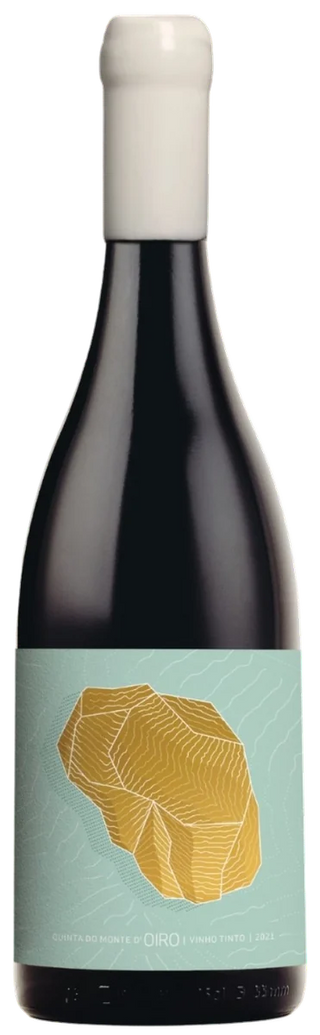
Quinta do Monte d'Oiro Pepita Oiro Tinto 2022
Quinta do Monte d'Oiro Pepita Oiro Tinto 2022 - 2022 is backordered and will ship as soon as it is back in stock.
Buy a case of 6 and save 10%
€17.82
per bottle
€118.80
€106.92
case of 6
Discount applied automatically in the cart. Cannot be combined with other codes.
- Free shippingfrom €150
- Secure paymentSSL · MB Way · card
- Returns14 days
- KlarnaPay in 3, interest-free

Quinta do Monte d'Oiro Pepita Oiro Tinto 2022 - 2022 is backordered and will ship as soon as it is back in stock.
TECH SHEET
Tap any tile to learn more
- Vintage
- 2022
- Country
- PortugalPortugal
- Region
- Lisboa
- Type
- Red
- Producer
- José Bento dos Santos
- Winemaker
- António Braga
- Grapes
 Syrah100%
- Alcohol
- 12% vol.
- Bottle
- 750 ml

Vintage
2022
4 years
Red wine: fermented on the skins, which give colour, tannin and structure.
Region · Portugal
Lisboa
Atlantic- and river-influenced regions around Lisbon and the Tagus valley. A wide range of grapes and styles, from fresh whites to full reds.
Type
Red
Red wine: fermented on the skins, which give colour, tannin and structure.
Producer
José Bento dos Santos
Lisboa, Portugal
- Region
- Lisboa, Portugal
- Winemaker
- António Braga
Grapes
Grapes in this wine
- Syrah100%
Intense red. Black fruit, pepper and spice, good structure.
See wines with Syrah
Alcohol
12% vol.
ABV shows the % of alcohol by volume.
Guide scale for wine — suggestion by style.
Bottle
750 ml
≈ 6 125 ml glasses
Wine profile
Body
This wine: 4 out of 5 — closer to «full».
How heavy and full the wine feels in your mouth — from light like skimmed milk to rich like cream. It comes mainly from alcohol, extract and, in sweet wines, sugar.
Wine profile
Tannin
This wine: 2 out of 5 — closer to «silky».
Tannins come from grape skins, seeds and oak. You feel them as a pleasant drying grip on gums and tongue — from silky and velvety to firm and chewy.
Wine profile
Acidity
This wine: 3 out of 5 — right in the middle.
The freshness that makes your mouth water, like a squeeze of lemon. It gives a wine tension, length and ageing potential, and makes it great with food.
Wine profile
Alcohol
This wine: 2 out of 5 — closer to «low» (12% vol.).
Alcohol brings warmth and body. Still wines usually sit between about 11% and 15% ABV, while fortified wines such as Port sit around 19–20%.
Wine profile
Sweetness
This wine: 1 out of 5 — closer to «dry».
The residual sugar you can taste. EU label guide for still wines: dry up to ~4 g/L, medium-dry up to ~12 g/L, medium-sweet up to ~45 g/L, sweet above that.
Wine profile
Red · ruby
Tap or hover a scale
Typical: average of 720 reds at Vinogrande
Critics & awards
- Grandes Escolhas20-point scale
Not sure? Ask our AI Sommelier NEW
Pairings, alternatives and advice in seconds
Description
Quinta do Monte d'Oiro Pepita Oiro Tinto 2022 is one of the new releases from the renowned Quinta do Monte d'Oiro (Lisboa/Alenquer), part of the recent expansion of the portfolio of the estate run by Francisco Bento dos Santos. This line ("Pepita" or "Oiro") aims to offer young wines full of identity, made from the estate's younger vineyards.
This wine stands out for its freshness and elegance, following Quinta do Monte d'Oiro's philosophy of making terroir wines with great affinity for food.
Tasting Note – Quinta do Monte d’Oiro Pepita Oiro Tinto 2022
ColourIt shows a light ruby colour and an elegant, delicate aromatic profile, with notes of fresh cherry and blackberry, subtle earthy nuances and a slight green touch from the use of stems. On the palate it stands out for its freshness and balance, with well-integrated acidity and fine, delicate, very elegant tannins. Harmonious, light and expressive, it ends with a tasty, persistent finish that underlines its food-friendly character. At just 12% alcohol, it is a red that favours freshness, precision and elegance over heavier, riper styles.
Food pairingFood pairing: Its freshness and delicate structure make it particularly versatile at the table. It is a perfect match for roast suckling pig, oven-roasted free-range chicken with herbs and pork loin with prunes. It is also an excellent choice for grilled red meat, such as veal steak or Iberian black pork presa or secreto. In traditional Portuguese cooking it pairs very well with duck rice, while roasted vegetables, particularly aubergine and peppers, with a semi-cured sheep's cheese make an especially interesting Mediterranean-inspired combination.
Grégory Viennois: A renowned French winemaker who acts as consultant and provides technical support to the project. He brings a strong Rhône Valley influence, the region that has historically inspired the estate's Syrah.
What to serve with this wine
Dishes calculated from this wine’s profile, grapes and region.