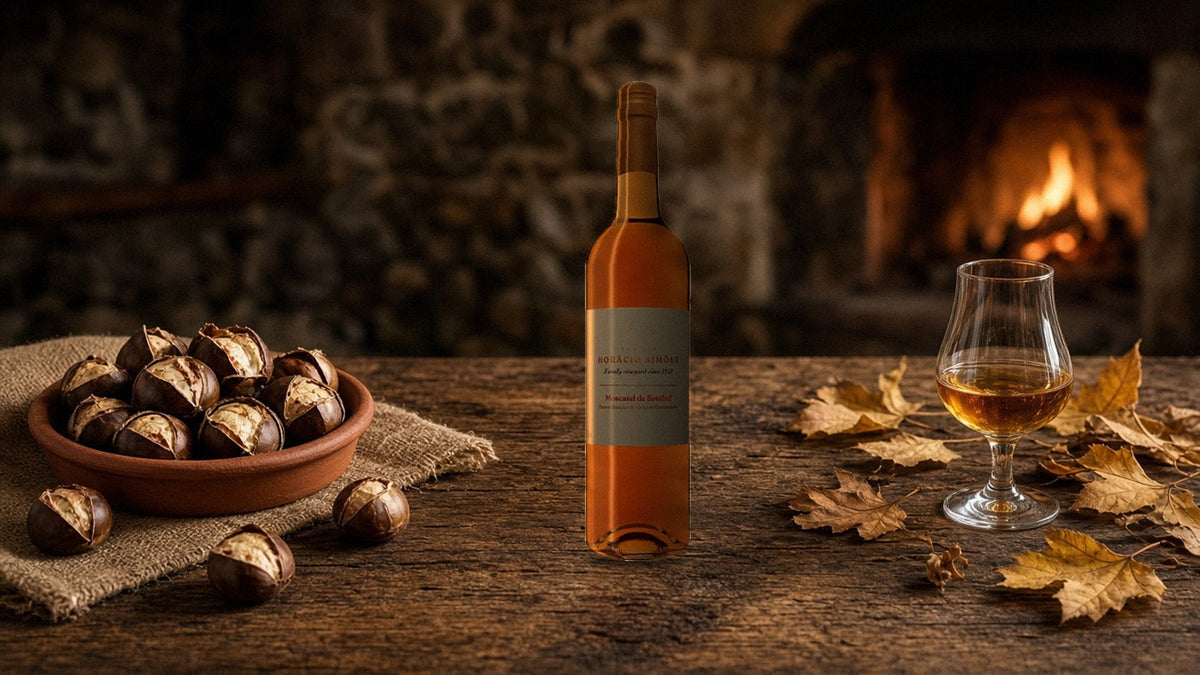
November arrives and with it the smell of chestnuts roasting in the street. For many Portuguese, the magusto (chestnut feast) isn't complete without a glass of jeropiga, the sweet, strong wine that has accompanied São Martinho (St Martin's Day, 11 November) for generations.
But what exactly is jeropiga, how does it differ from água-pé, and which sweet wines can you serve if you don't have a homemade bottle to hand? This guide covers the essentials, without myths, plus a few suggestions from the Vinogrande wine shop for your magusto.
The drink
What is jeropiga?
Jeropiga is a traditional Portuguese drink made from grape must — the juice of freshly crushed grapes — with grape spirit (aguardente) added.
The spirit stops fermentation right at the start, before the yeasts turn the sugar into alcohol. The result is a sweet drink, because it keeps much of the grape's natural sugar, and stronger than a table wine.
DECO PROteste puts its alcohol at around 15 to 18% vol. and recommends serving it slightly chilled, at 8 to 10 ºC. The DGADR register of Traditional Portuguese Products links it mainly to Trás-os-Montes and notes it's also made in the Beiras, usually with less spirit.
«The essential drink at chestnut feasts.»
Traditional Portuguese Products, DGADR
There are many family recipes. Some add sugar, others a cinnamon stick or a clove. The most common ratio is two parts must to one part spirit; those who like a softer jeropiga use three parts must.
Traditions
Jeropiga and água-pé: what's the difference?
Many people confuse the two, as both turn up at chestnut feasts and both come from the harvest. The difference lies in the raw material:
- Jeropiga: made with must (grape juice) and grape spirit. Sweet, full-bodied and quite strong.
- Água-pé: uses the pomace — the skins and pips left after pressing — with water added. After a short fermentation, it makes a light, low-alcohol drink with a slight prickle.
In practice, água-pé is drunk as a light, sociable drink and jeropiga as a small glass of sweet wine, closer to a fortified wine.
At the table
Jeropiga with chestnuts: why do they go so well together?
Roast chestnuts are floury, slightly sweet and lightly smoky from the embers. A sweet wine with enough alcohol balances that dry texture, cleans the palate and matches the toasty notes.
«On São Martinho's Day, you eat chestnuts and drink wine.»
And the wine most often served with chestnuts is jeropiga. The same logic explains why other Portuguese fortified wines, such as Moscatel, Tawny Port or Madeira, also work very well at a magusto. All have the sweetness, freshness and alcohol to stand up to chestnuts, and an open bottle keeps for several weeks.
Our selection
Where to buy jeropiga, and the alternatives
Homemade jeropiga is still the most sought after, but not everyone has a producer in the family. Vinogrande doesn't sell jeropiga at the moment, but we do have fortified wines from well-known producers that do the same job at the table: sweet, fortified with grape spirit and great with chestnuts.
Moscatel de Setúbal: the most aromatic alternative
Moscatel de Setúbal has its fermentation stopped with grape spirit and stays in long contact with the grape skins, which gives it lots of aroma.

Moscatel de Setúbal Horácio Simões
A house founded in 1910 at Quinta do Anjo, Palmela. Floral, raisins and walnuts, fresh finish.
See bottle
Quinta do Piloto Moscatel Roxo
From the rare Moscatel Roxo grape: caramel, orange and spice.
See bottleAll the options: Moscatel de Setúbal wines.
Douro Moscatel: sweet, with mountain freshness
Moscatel is also made in the Douro, especially in the region's higher areas, such as Favaios.

Secret Spot Moscatel do Douro 10 anos
A 50 cl bottle, a good choice to share at a small magusto.
See bottleSee more in Moscatéis.
Port: Ruby, Tawny and the sweet Lágrima
Port is jeropiga's most famous cousin: here too, fermentation is stopped with grape spirit.

Vista Alegre Lágrima Tawny
For those who like their jeropiga very sweet; an average of 4 to 5 years in oak.
See bottle

The full selection: Port wines, Tawny and Ruby.
Madeira: for those who like sweetness with acidity

H.M. Borges Malmsey 15 Anos
Sweet Madeira from the Malvasia grape, with marked acidity; to round off the magusto.
See bottleServing
How to serve jeropiga and fortified wines at a magusto
- Temperature: jeropiga slightly chilled, at 8 to 10 ºC. Moscatels and Tawnies also benefit from a little chill; half an hour in the fridge is enough.
- Glass: use small glasses. These are sweet, stronger wines, for sipping slowly.
- Quantity: a 75 cl bottle gives about 10 to 12 small glasses.
- Once opened: fortified wines keep for a few weeks well stoppered, upright and somewhere cool.
- Snacks: as well as chestnuts, try them with cured cheese, bolo de mel (honey cake) or nuts.
FAQ
Frequently asked questions about jeropiga
Is jeropiga a wine or a liqueur?
It's a fortified sweet wine, also called a licoroso. It's made with grape must and grape spirit: sweet like a liqueur, but grape-based like wine.
How strong is jeropiga?
According to DECO PROteste, around 15 to 18% vol. Homemade versions can vary a lot, depending on how much spirit is added.
What's the difference between jeropiga and água-pé?
Jeropiga is made with must and grape spirit and is sweet and strong. Água-pé is made by adding water to the grape pomace after pressing and is light and low in alcohol.
Should jeropiga be served chilled or at room temperature?
It's most often served slightly chilled, at 8 to 10 ºC. Too cold and it loses aroma; too warm and the alcohol stands out.
How is homemade jeropiga made?
The grapes are crushed, the must is drawn off and grape spirit is added, usually two parts must to one part spirit. Some recipes let the must ferment for a day or two and add sugar, cinnamon or clove. It then rests for a few weeks, is strained and bottled.
What can I serve on São Martinho if I don't have jeropiga?
Any sweet fortified wine works: Moscatel de Setúbal, Douro Moscatel, Tawny or Ruby Port, or a sweet Madeira. If you prefer table wine, a young, fruity red also goes well with chestnuts.
To finish
A toast to São Martinho
Whether with homemade jeropiga, a Moscatel de Setúbal or a Tawny Port, what matters is gathering family and friends around the chestnuts. Get your magusto ready in good time with our selection of Moscatéis and Port wines. Happy São Martinho!
Please drink responsibly.