
Review & get 10% off
Review this product and we’ll give you 10% off your next purchase. Write a review →
We offer 10% off your next purchase for every honest review, positive or negative.
Thank you for your review!
Here is 10% off your next purchase:
One use per customer. Cannot be combined with other offers.
We offer 10% off your next purchase for every honest review, positive or negative.

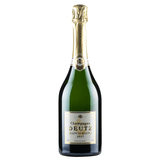
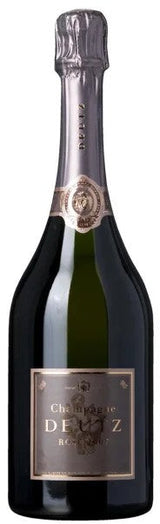
Deutz Brut Vintage Millésimé 2018
Deutz Brut Vintage Millésimé 2018 is backordered and will ship as soon as it is back in stock.
Buy a case of 6 and save 10%
€64.71
per bottle
€431.40
€388.26
case of 6
Discount applied automatically in the cart. Cannot be combined with other codes.
- Free shipping to Spainfrom €150
- Secure paymentSSL · MB Way · card
- Returns14 days
- KlarnaPay in 3, interest-free

Deutz Brut Vintage Millésimé 2018 is backordered and will ship as soon as it is back in stock.

Champagne house
Deutz
Aÿ, Champagne, France · since 1838
Deutz was founded in Aÿ in 1838 by William Deutz and Pierre-Hubert Geldermann, two wine merchants from Aachen, as Deutz & Geldermann. It was a founding member of the Syndicat des Grandes Marques in 1882 and has been part of the Louis Roederer group since 1993, keeping its own house and style in Aÿ.
- Founded
- 1838
- Region
- Aÿ, Champagne, France
Key facts
- Founded in 1838 in Aÿ
- Grande Marque since 1882
- Louis Roederer group since 1993
Winemaking team
Image: Imagens: site oficial champagne-deutz.com
Winemaker
Fabrice Rosset
Estates they work with
In stock at Vinogrande

Winemaker
Michel Davesne
Estates they work with
TECH SHEET
Tap any tile to learn more
- Country
- FranceFrance
- Region
- Champagne
- Type
- White
- Producer
- Deutz
- Winemaker
- Michel Davesne
- Alcohol
- 12% vol.
- Bottle
- 750 ml


Vintage
2018
8 years
White wine: fermented without the skins, favouring freshness and aroma.
Region · France
Champagne
France’s northernmost wine region, on chalk soils. Birthplace of the traditional method, with Chardonnay, Pinot Noir and Pinot Meunier.
- Country
- France
- Producer
- Deutz
- Grapes
- Pinot Noir (62%), Chardonnay (34%), Pinot Meunier (4%)
Type
White
White wine: fermented without the skins, favouring freshness and aroma.
Producer
Deutz
Aÿ, Champagne, France · since 1838
Deutz was founded in Aÿ in 1838 by William Deutz and Pierre-Hubert Geldermann, two wine merchants from Aachen, as Deutz & Geldermann. It was a founding member of the Syndicat des Grandes Marques in 1882 and has been part of the Louis Roederer group since 1993, keeping its own house and style in Aÿ.
- Founded
- 1838
- Region
- Aÿ, Champagne, France
- Winemaker
- Michel Davesne
Winemaker
Michel Davesne
- Producers & estates
- Deutz
Grapes
Grapes in this wine
- Pinot Noir62%
Delicate, demanding red. Red fruit, cherry, earthy notes, silky tannins and great finesse.
See wines with Pinot Noir - Chardonnay34%
World-class white that mirrors its terroir. From apple and citrus in cool climates to tropical fruit and butter with oak.
See wines with Chardonnay - Pinot Meunier4%
Champagne red grape that adds fruit and roundness to the blend.
See wines with Pinot Meunier
Alcohol
12% vol.
ABV shows the % of alcohol by volume.
Guide scale for wine — suggestion by style.
Bottle
750 ml
≈ 6 125 ml glasses
Wine profile
Body
This wine: 3 out of 5 — right in the middle.
How heavy and full the wine feels in your mouth — from light like skimmed milk to rich like cream. It comes mainly from alcohol, extract and, in sweet wines, sugar.
Wine profile
Acidity
This wine: 5 out of 5 — closer to «crisp».
The freshness that makes your mouth water, like a squeeze of lemon. It gives a wine tension, length and ageing potential, and makes it great with food.
Wine profile
Alcohol
This wine: 2 out of 5 — closer to «low» (12% vol.).
Alcohol brings warmth and body. Still wines usually sit between about 11% and 15% ABV, while fortified wines such as Port sit around 19–20%.
Wine profile
Sweetness
This wine: 1 out of 5 — closer to «dry».
The residual sugar you can taste. EU label guide for still wines: dry up to ~4 g/L, medium-dry up to ~12 g/L, medium-sweet up to ~45 g/L, sweet above that.
Wine profile
Mousse
This wine: 3 out of 5 — right in the middle.
How the bubbles feel in your mouth — from fine and creamy to lively and vigorous.
Wine profile
White
Tap or hover a scale
Typical: average of 453 whites at Vinogrande
Tasting notes
Producer's notes
Critics & awards
- James Suckling
- Wine Spectator
- Bettane+Desseauve
- Gault & Millau
- VinousAntonio Galloni
Serve & enjoy

Slender tulip bowl: keeps the fine bubble and reveals the aromas.
from €48.60
Sophienwald Phoenix Champagne
The tulip shape with a narrower rim holds the sparkle, while the bowl, a little wider than a flute, lets the aromas of bottle age show.
- MaterialMouth-blown
- Units1 or 2 (gift box)
- DishwasherHand-wash preferred
- ReferenceSW1007
What it does
- Keeps the bubble
- Opens the aromas
- Balances acidity
Best wines
Champagne, traditional-method sparkling wine, Cava, sparkling rosé.
Care
- Hand-wash in warm water
- Dry and polish with microfibre
- Store upright, never stacked
Why for this wine: Fine-bubble sparkling wine → Sophienwald Phoenix Champagne.


How to serve this wine
- Temperature8–10 °C
- Open / decanton opening
- Fill tohalf the glass
Explore other glasses


UNO Perlé Sparkling
The slender shape keeps the bubble longer and concentrates the aromas; made for everyday use.
- MaterialMachine-blown crystal
- UnitsSet of 2
- DishwasherYes, per the maker
- ReferenceSW1010PERLE
What it does
- Keeps the bubble
- Opens the aromas
- Balances acidity
Best wines
Sparkling wine, Cava, Prosecco, Champagne.
Care
- Dishwasher-safe
- Dry and polish with microfibre
- Store upright, never stacked


UNO Plus Universal
A balanced bowl that works across very different styles: practical every day and at a table with several wines.
- MaterialMachine-blown crystal
- UnitsSet of 2
- DishwasherYes, per the maker
- ReferenceSW1010PLUS
What it does
- Opens the aromas
- More surface to aerate
- Balances acidity
Best wines
Fresh whites, rosés, aromatic reds, sparkling wine and Port.


Care
- Dishwasher-safe
- Dry and polish with microfibre
- Store upright, never stacked


UNO Red Tinto
The tulip concentrates fruity aromas and softens the perception of acidity; light and sturdy for everyday use.
- MaterialMachine-blown crystal
- UnitsSet of 2
- DishwasherYes, per the maker
- ReferenceSW1010RED
What it does
- Opens the aromas
- Balances acidity
- Softens the tannins
Best wines
Light reds with fresh acidity and soft tannins: young Pinot Noir, Gamay, young reds from Dão or Galicia.


Care
- Dishwasher-safe
- Dry and polish with microfibre
- Store upright, never stacked

Tall, generous bowl: aerates and softens the tannins of full-bodied reds.
from €48.60
Sophienwald Phoenix Bordeaux
The large bowl gives the wine surface to open its aromas, and the height directs the wine to the middle of the palate, balancing tannin and fruit.
- MaterialMouth-blown
- Units1 or 2 (gift box)
- DishwasherHand-wash preferred
- ReferenceSW1030
What it does
- Opens the aromas
- More surface to aerate
- Softens the tannins
Best wines
Full-bodied, tannic reds: Cabernet, Touriga Nacional, Douro, Alentejo, Rioja, Ribera del Duero.

Care
- Hand-wash in warm water
- Dry and polish with microfibre
- Store upright, never stacked

Wide balloon bowl: gathers the delicate aromas of Pinot Noir and Chardonnay.
from €48.60
Sophienwald Phoenix Bourgogne
The wide bowl and tapering rim concentrate fine, complex aromas; ideal for aromatic wines with lively acidity.
- Height23 cm · Ø 13 cm
- MaterialMouth-blown
- Units1 or 2 (gift box)
- DishwasherHand-wash preferred
- ReferenceSW1002
What it does
- Opens the aromas
- More surface to aerate
- Balances acidity
Best wines
Pinot Noir, Burgundy, Barolo, Brunello, oak-aged Chardonnay, light and elegant reds.
Care
- Hand-wash in warm water
- Dry and polish with microfibre
- Store upright, never stacked


Not sure? Ask our AI Sommelier NEW
Pairings, alternatives and advice in seconds
Description
Deutz Brut Vintage Millésimé 2018 is a prestigious Champagne, recognised for its elegance, precision and complex, food-friendly profile. Made by the historic house of Champagne Deutz in Aÿ, it reflects the ideal weather of the 2018 harvest, which gave perfect, balanced ripening. This sparkling wine stands out for its fresh, expressive aromatic profile, dominated by pure green apple and delicate citrus notes of lemon zest. The mineral component is well defined, with a characteristic chalky feel, complemented by subtle hints of fine pastry evoking brioche and puff pastry.
What to serve with this wine
Dishes calculated from this wine’s profile, grapes and region.
Help me choose
Is this wine for you?
Three similar wines from our shop, same type, matched on region and price.
…
- Gift messageYou can write a gift message in your basket before checkout.
- Deliver to someone elseAt checkout, enter the recipient's address as the delivery address.